
 English


Views: 0 Author: Site Editor Publish Time: 2026-04-07 Origin: Site


What if a cath lab and a C-Arm Machine are not actually comparable in the way many buyers think? One is a complete procedural environment, while the other is an imaging device for real-time X-ray guidance.
In this post, you will learn what sets them apart, how they work together, and which solution may be the better fit for your facility.
A cath lab, or catheterization laboratory, is a specialized room for minimally invasive diagnostic and interventional procedures. It is commonly used in cardiology, vascular intervention, and electrophysiology.
A cath lab includes more than imaging equipment. It often contains an imaging system, procedure table, monitors, hemodynamic tools, contrast management, shielding, and workflow software. In other words, it is a complete clinical environment, not a single machine.
This is why a cath lab is not the same as a C-Arm Machine. A cath lab is the overall procedural setting, while a C-Arm Machine is one imaging device that may be used within it.
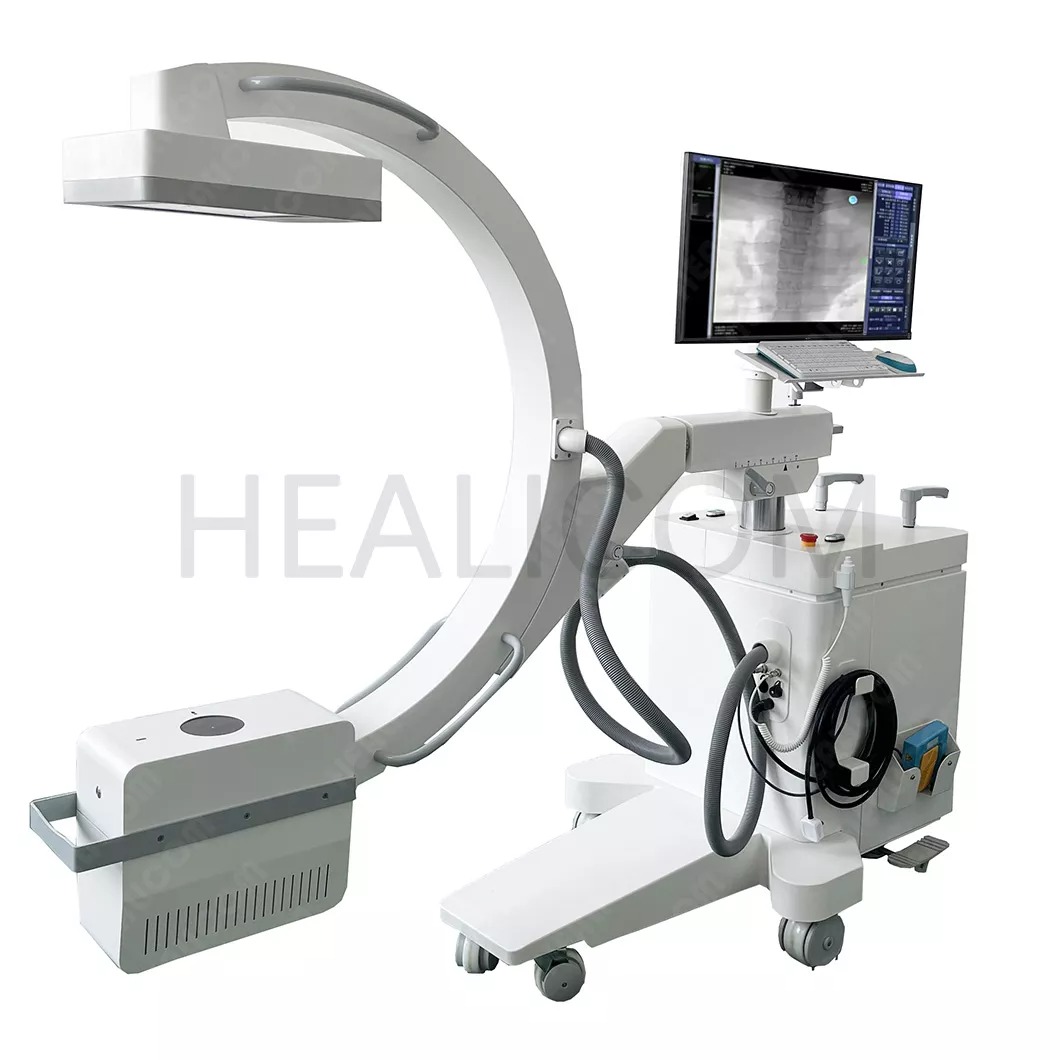
A C-Arm Machine is a fluoroscopic X-ray imaging system designed to provide real-time imaging during diagnostic, surgical, and interventional procedures.
That definition explains the name. The system uses a C-shaped arm that connects the X-ray source and the detector. This design allows flexible positioning and continuous visualization, which is why a C-Arm Machine is widely used for procedures that require real-time image guidance.
A C-Arm Machine can be mobile or stationary. In current clinical practice, mobile C-Arm Machine platforms are widely used in surgical environments, while more advanced fixed interventional systems are often integrated into dedicated procedure rooms and hybrid operating environments.
The clinical uses of a C-Arm Machine are broad. It can be used in diagnostic, surgical, and interventional procedures, including orthopedic, gastrointestinal, neurology, urology, vascular, emergency, and critical-care applications. That is one reason the C-Arm Machine remains such a versatile product category for manufacturers and distributors.
From a buyer’s perspective, a C-Arm Machine is a device category, not a room category. It is purchased for imaging capability, mobility, detector type, workflow, field of view, dose management, and application fit. That makes it fundamentally different from a cath lab, which is planned as a complete procedural environment.
The simplest way to explain the difference is this: a cath lab is a place and a system, while a C-Arm Machine is a piece of imaging equipment.
A cath lab is designed around a procedural workflow. A C-Arm Machine is designed around image acquisition and guidance. A cath lab may contain a fixed angiography platform or another advanced imaging system, a procedure table, monitors, contrast tools, and integrated controls. A C-Arm Machine may be one component inside such a room, or it may operate in a surgery department, pain room, emergency environment, or mobile workflow far outside a formal cath lab.
Here is a direct comparison:
Aspect | Cath Lab | C-Arm Machine |
Basic definition | Specialized procedural room or suite | Fluoroscopic X-ray imaging device |
Main role | Supports catheter-based or image-guided intervention | Provides real-time imaging |
Scope | System-level clinical environment | Single equipment category |
Typical setup | Imaging platform, table, monitors, workflow tools, shielding | C-shaped arm, X-ray source, detector, display/workstation |
Mobility | Usually fixed room installation | Can be mobile or stationary |
Typical users | Interventional cardiology, vascular teams, EP teams | Surgery, orthopedics, pain, vascular, urology, GI, emergency, interventional teams |
Budget level | Much higher total project cost | Lower than a full cath lab project in most cases |
This comparison also explains why the user’s search intent is often mixed. When people search “Cath Lab vs C-Arm Machine,” they may actually be asking one of three questions. First, they may want a definition. Second, they may want to know whether a C-Arm Machine can perform some cath-lab-style work. Third, they may be trying to decide which option their facility should budget for.
The main difference, then, is not just technical. It is strategic. A cath lab is about procedural capability at the room level. A C-Arm Machine is about imaging capability at the equipment level.
Yes, a C-Arm Machine can be used in or alongside cath-lab-style environments, but not every C-Arm Machine is designed to replace a full cath lab installation.
This is where many buyers get confused. Because a C-Arm Machine provides real-time fluoroscopic imaging, it overlaps conceptually with image-guided intervention. However, a formal cath lab usually demands a deeper level of workflow integration, room planning, monitoring, and procedural infrastructure than a general-purpose C-Arm Machine package provides.
A mobile C-Arm Machine is commonly used in surgery, orthopedics, pain management, and certain vascular or interventional settings. But a dedicated cath lab or advanced interventional suite often relies on fixed angiography platforms designed for continuous procedural workflows, broader room integration, and more specialized cardiovascular applications.
In other words, there is overlap, but not equivalence.
You can think of it this way:
● A cath lab may include fixed C-arm-based angiographic imaging.
● A C-Arm Machine may support some interventional tasks.
● But a mobile or general surgical C-Arm Machine does not automatically become a full cath lab solution.
This distinction is especially important for procurement teams. If your project involves cardiac catheterization, electrophysiology, angiography-heavy cardiovascular procedures, or a dedicated interventional suite, then room design and system integration matter as much as the imaging device itself. If your project is centered on orthopedic surgery, pain intervention, urology, trauma, or general fluoroscopic guidance, then a C-Arm Machine may be the more appropriate and cost-effective choice.
Clinical application is one of the clearest ways to separate a cath lab from a C-Arm Machine.
A cath lab is strongly associated with cardiac and vascular procedures. It is often used for interventional cardiology, electrophysiology, neuroradiology, and interventional radiology, with diagnostic and therapeutic work involving vessels, pressures, blood flow, and catheter-based access.
A C-Arm Machine, by contrast, appears across a wider range of procedural settings. It is used in orthopedic procedures, gastrointestinal procedures, neurology, urology, vascular work in critical care, and emergency-room procedures. That broader application range is one reason a C-Arm Machine has such strong commercial appeal in surgery centers and multispecialty hospitals.
Here is a simplified comparison by use case:
Clinical Area | Cath Lab | C-Arm Machine |
Interventional cardiology | Core use | Possible in specialized fixed systems, less typical for general mobile systems |
Cardiac catheterization | Core use | Not the typical main role for a general mobile C-Arm Machine |
Electrophysiology | Common | May assist in some settings, but not the full room concept |
Orthopedic surgery | Not the main identity of a cath lab | Very common use |
Trauma surgery | Limited as a cath-lab identity | Very common use |
Pain management | Not the typical core cath-lab focus | Very common use |
Urology | Not the main cath-lab focus | Common use |
GI procedures | Not the main cath-lab focus | Common use |
Emergency fluoroscopy guidance | Not the usual cath-lab role | Common in selected systems |
For marketing and SEO, this is an important takeaway. If your independent site sells a C-Arm Machine, you should not frame it only as a cardiology or cath-lab product unless your system is specifically built for that level of intervention. In most buyer journeys, a C-Arm Machine is evaluated by surgical specialty, fluoroscopy workflow, detector size, mobility, and procedure mix.
A second major buying question is not just cath lab versus C-Arm Machine, but fixed versus mobile imaging.
Fixed systems are usually chosen when a hospital wants deeper room integration, higher throughput, and a more dedicated procedural workflow. These systems are often positioned for cardiovascular interventions, image-guided therapy, and hybrid procedural environments.
Mobile systems are chosen for flexibility. A mobile C-Arm Machine can move between rooms, support multiple specialties, and reduce installation complexity. It is often valued for versatility, ergonomics, and efficiency.
That difference affects planning in several ways:
● Better room-level integration
● Stronger alignment with dedicated interventional workflows
● More suitable for specialized high-volume cardiovascular procedures
● Better fit for cath labs and hybrid OR strategy
● Lower installation burden
● Greater flexibility across departments
● Better for orthopedics, pain, trauma, and multispecialty use
● Easier capital planning for smaller facilities
The latest trend line suggests that both categories are evolving rather than replacing one another. Fixed systems are becoming smarter and more integrated. Mobile C-Arm Machine platforms are becoming more capable, with better detectors, 2D/3D options, and improved workflow support.
For a manufacturer, this matters because buyers are no longer choosing only on image availability. They are choosing on workflow, AI readiness, room design, clinical focus, and total operational fit.
This is the section where educational content becomes purchasing guidance.
If you run a major cardiovascular center, a hospital interventional department, or a project focused on advanced catheter-based procedures, you may need something closer to a full cath lab or fixed interventional imaging suite. In that case, the question is not whether a C-Arm Machine exists, but whether the whole room and workflow are designed for your intended procedures.
If you run a surgical center, orthopedic department, trauma service, pain clinic, or multispecialty hospital unit, a C-Arm Machine may be exactly what you need. In many such settings, mobility, ease of use, detector performance, and flexible room deployment matter more than cath-lab-scale integration.
Here is a practical facility guide:
Facility Type | Likely Best Fit |
Cardiovascular center | Cath lab or fixed interventional imaging suite |
Large tertiary hospital with hybrid procedure plan | Fixed interventional system, possibly within hybrid OR or dedicated suite |
Orthopedic surgery center | Mobile C-Arm Machine |
Pain management center | Mobile C-Arm Machine |
Urology department | Mobile C-Arm Machine or specialty fluoroscopy solution |
General hospital surgery block | Mobile C-Arm Machine |
Multispecialty clinic with occasional fluoroscopy | Mobile C-Arm Machine |
Buyers should ask themselves a few key questions before making a decision:
1. What procedures will we perform most often?
2. Do we need room-level cardiovascular workflow integration?
3. Will the imaging system serve one specialty or many?
4. Do we need mobility?
5. Will we use the system mainly for surgery, pain, orthopedics, or vascular intervention?
6. Are we building a procedural room or buying a standalone imaging device?
7. Do we need advanced workflow features that align with current image-guided therapy trends?
These questions help clarify whether the facility actually needs a cath lab project or a C-Arm Machine purchase.
For a professional manufacturer, this is also where product positioning matters. If your company produces a C-Arm Machine, the strongest message is not to claim it replaces every cath lab. The stronger message is that your C-Arm Machine fits the right clinical scenarios, installation models, and workflow needs. That approach is more accurate, more credible, and more persuasive to serious buyers.
So, what is the difference between a cath lab and a C-Arm Machine? A cath lab is a complete procedural environment, while a C-Arm Machine is an imaging device for real-time X-ray guidance. They work together in some settings, but they are not the same thing.
The right choice depends on your clinical needs, installation conditions, and workflow goals. A cath lab is better for highly integrated interventional procedures, while a C-Arm Machine is ideal for many surgical and multispecialty imaging applications.
At Healicom Medical, we believe the best solution is the one that fits your facility, budget, and long-term development plan.
No. A cath lab is a specialized procedural room or suite, while a C-Arm Machine is an imaging device used for fluoroscopic guidance.
Yes, some C-Arm Machine platforms can be used in interventional environments, but a general mobile system does not automatically replace a full cath lab installation.
Cath labs are commonly used for cardiac catheterization, angiography, angioplasty, stent placement, electrophysiology, and other catheter-based interventional procedures.
A C-Arm Machine can support many diagnostic, surgical, and interventional procedures, including orthopedics, GI, neurology, urology, vascular work, and emergency applications, depending on system type and indication.
In most cases, a full cath lab project is far more expensive than buying a standalone C-Arm Machine, because the cath lab includes room infrastructure, integration, and broader procedural support.


